Bristol sits at one of Vermont's most dramatic geographic seams — the Green Mountains rise sharply to the east, and the Champlain Valley opens wide to the west. In fall, that positioning gives you something rare: a front-row seat to two entirely different foliage landscapes at once, all from a single small town.
Why Bristol for Fall Foliage?
Most Vermont foliage towns offer one vantage point — valley views, or mountain views. Bristol offers both. Stand at Deer Leap Mountain and you're looking down at the valley canopy below. Drive west on Route 17 and you're watching the foliage roll out across the flats toward Lake Champlain. The combination makes Bristol one of the most versatile foliage destinations in Addison County.
Peak color in the Bristol area typically runs from late September through mid-October, with the Green Mountain elevations turning first and the valley floor following a week or so behind.

Deer Leap Mountain: The Above-Canopy View
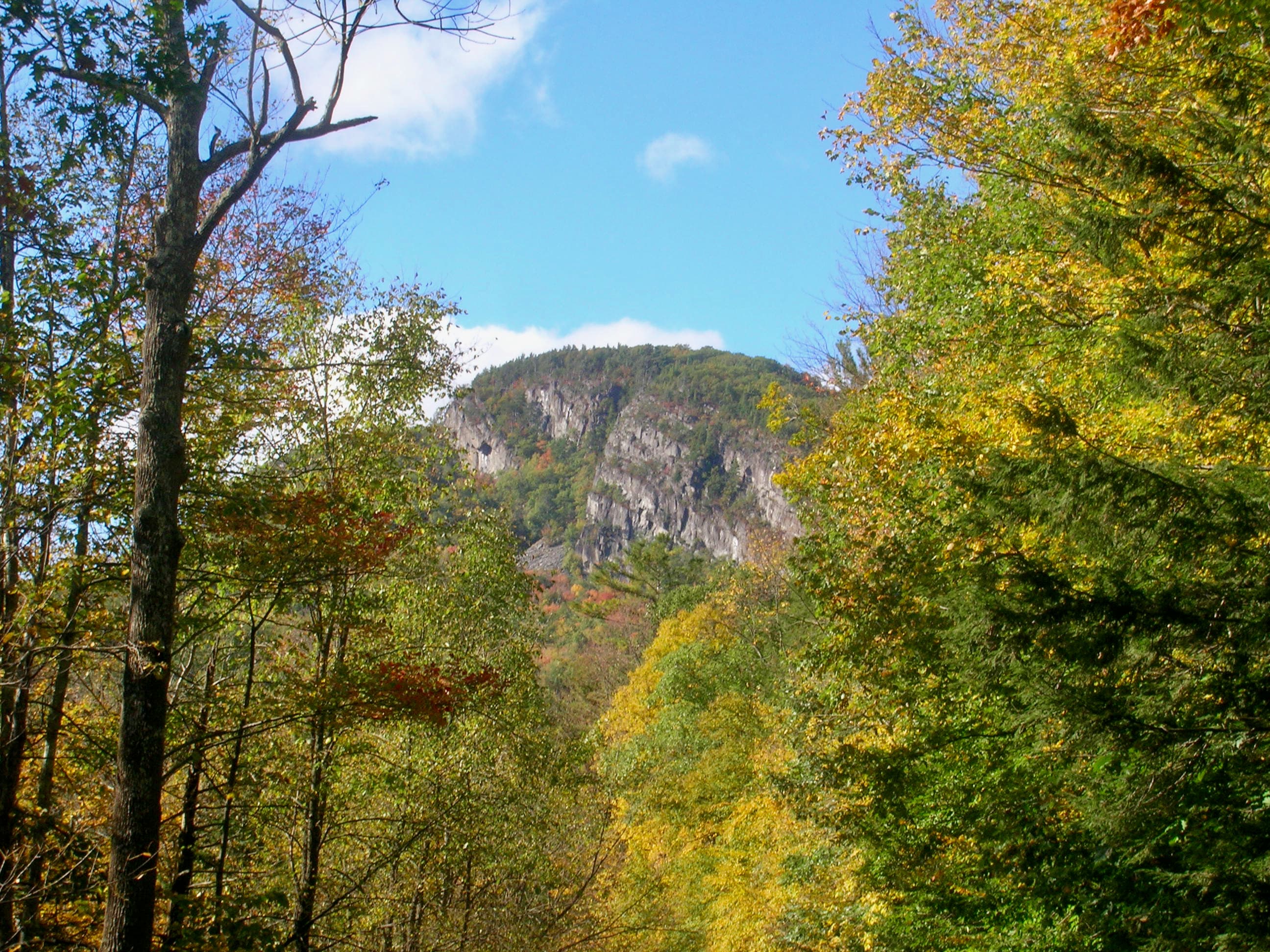
There is no better single fall foliage viewpoint in Addison County than the ledge at Deer Leap Mountain. The trail climbs 1,000 feet in about 1.75 miles to open rock cliffs — and in peak fall, you're standing above the entire canopy, looking down at a sea of orange, red, and gold spreading across the valley floor below.
This is the kind of view that photographs don't fully capture. The cliffs drop away sharply, Bristol town is visible far below, and on a clear October day you can see the Adirondack peaks across Lake Champlain in New York.
The trailhead is on North Rocky Dale Road — search "Bristol Cliffs Wilderness Trailhead" in Google Maps. Allow 2.5 to 3.5 hours round trip. More details in our full Deer Leap Mountain trail guide.
Best timing: Late September to mid-October. Aim for a weekday if possible — the trailhead parking is limited and the summit is popular in peak season.
Lincoln Gap Road: Vermont's Most Dramatic Fall Drive
Just south of Bristol, Lincoln Gap Road climbs from the village of Lincoln over the spine of the Green Mountains at 2,424 feet — the steepest paved road in Vermont. In fall, the drive from the valley floor up through the hardwood forest and into the boreal zone at the summit is one of the most intense foliage experiences in the state.
The colors at elevation (the birch and beech higher up) turn first, typically around the last week of September. As you descend toward Lincoln Gap from the Bristol side, the views over the valley are extraordinary. Note: Lincoln Gap Road closes for winter and is not maintained through the cold months — visit in September or October.
Best timing: Last week of September through first week of October for upper elevations. The full valley-to-summit gradient is most dramatic in early October.

Route 116: The Valley Foliage Drive
Vermont Route 116 runs north-south through the heart of Addison County, connecting Bristol to Middlebury (15 minutes south) and to Hinesburg and Burlington (30 minutes north). In fall, this is one of Vermont's most beautiful rural drives — the road passes through farmland, river bottomland, and small villages with the Green Mountains as a constant backdrop.
The stretch from Bristol north through New Haven and Starksboro is particularly good: the road hugs the base of the mountains, and on a clear October day the contrast of the colored hillsides against the open pastures and the Champlain Valley beyond is hard to top.
Best timing: Peak valley color typically runs October 5–15 in most years. The drive is good throughout the day, but morning light from the south (headed north) and afternoon light from the north (headed south) each have their appeal.
Eagle Park & the New Haven River
For foliage without the elevation gain, Eagle Park on the edge of Bristol's downtown puts you right at the New Haven River with a canopy of sugar maples overhead. In peak season the reflection of fall color in the river pools is worth a stop on its own. The park has picnic tables and easy walking paths — a natural complement to an afternoon in town.
The New Haven River also has well-known swimming holes just south of town that transform into calm, photogenic pools in fall once the summer crowds are gone. The light in October along the river corridor is exceptional.

When to Go: Fall Foliage Timing in Bristol
Vermont fall color follows elevation — the mountains turn first, the valleys turn last. In the Bristol area:
- Late September (Sept 22–30): Upper elevations (Lincoln Gap summit, Deer Leap ridge) at or near peak. Valley floor still green or just beginning to turn.
- Early October (Oct 1–10): The prime window. Mid-elevations are at peak; valley floor is turning. Deer Leap and Lincoln Gap are both spectacular. Route 116 drive is excellent.
- Mid-October (Oct 10–20): Valley floor at peak. Good for the river walks and town drives. Mountain peaks past peak but still colorful.
- Late October: Most color gone. But the bare hardwoods and late-season light can be beautiful in their own right.
Vermont's foliage is weather-dependent from year to year. A dry summer followed by cool nights and warm days in September produces the most vivid colors. The Vermont Foliage Report updates weekly during the season.
Where to Stay and Eat
Bristol is compact enough to use as a foliage base for the whole Addison County area. After a day on the trails or drives, the options for refueling are better than you might expect for a town this size.
Bobcat Cafe & Brewery is the natural post-hike stop — they brew their own beer on site and serve comfort food that earns its place after a 3-mile climb. South Mountain Tavern has live music Wednesday and Friday nights, which in October makes for a genuinely festive evening. For a sit-down dinner, The Tillerman offers a more elevated option.
Browse the full Bristol restaurant guide for hours and details on all eight local dining spots.
Planning a fall trip to Bristol? Browse Bristol businesses and make the most of your visit.